


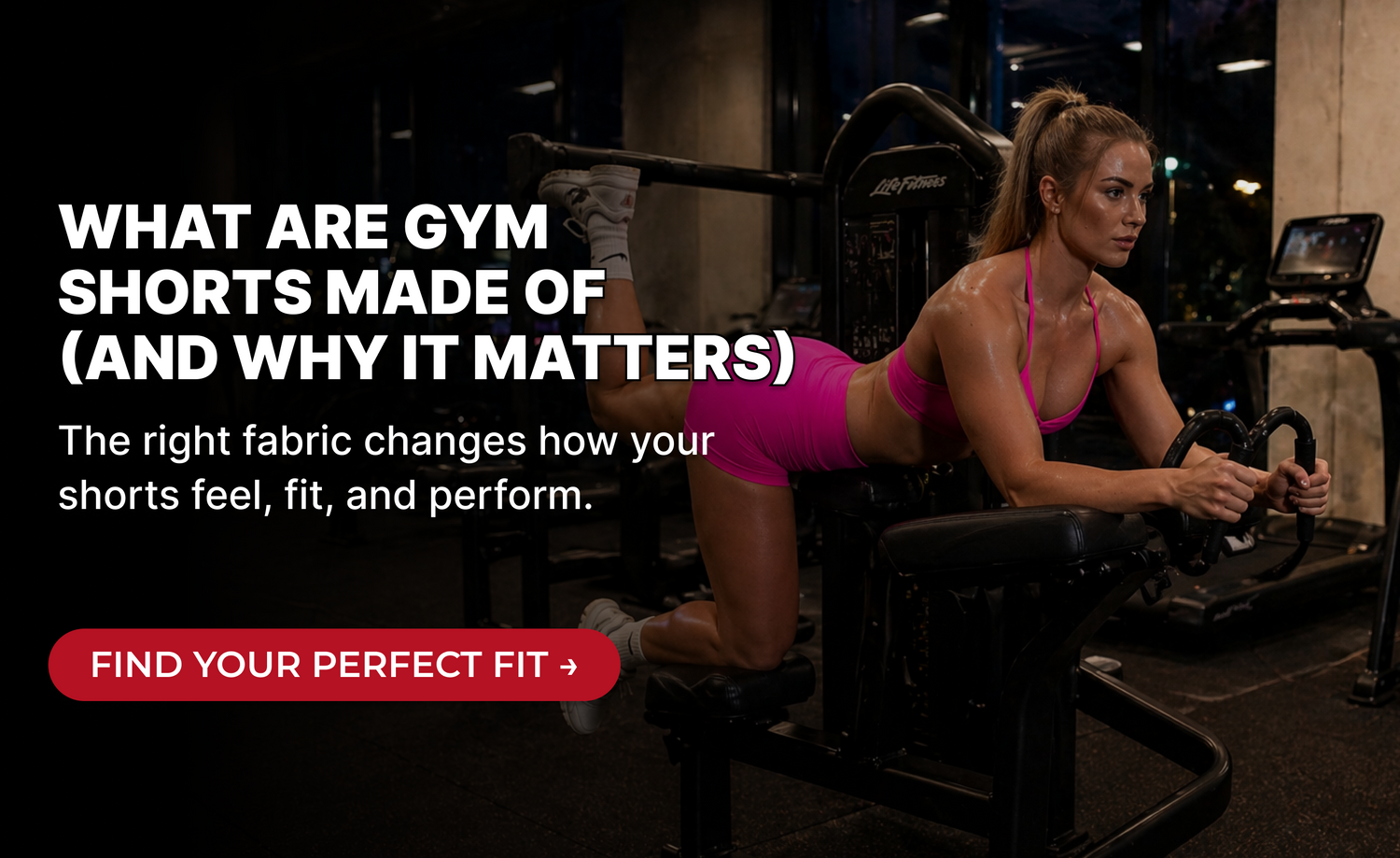
Gym shorts are usually made from performance fabrics like nylon, polyester, and elastane, designed for stretch, durability, and sweat control. The right fabric directly affects comfort, fit, and how your shorts perform during workouts. If you are asking what are gym shorts made of, the real answer is this: the best pairs are built from fabric blends that move, sculpt, breathe and stay put under pressure.
Quick Summary
- Most gym shorts use synthetic performance fabrics
- Nylon and polyester improve durability and sweat control
- Elastane adds stretch and flexibility
- Seamless construction reduces friction and discomfort
- The right fabric improves both comfort and performance
- Compression level matters. Lifting shorts need more structure, while studio and recovery shorts can feel softer and lighter.
- A better fabric blend should hold shape, support movement and flatter your silhouette from gym floor to everyday wear.
What Are Gym Shorts Made Of?
Most gym shorts are made from a blend of synthetic materials designed for movement and performance. The exact blend changes the way the shorts feel, stretch, sculpt and handle sweat.
The most common fabrics include:
- Nylon - smooth, durable, lightweight and often used for a soft, second-skin feel.
- Polyester - breathable, hard-wearing and strong for sweat-heavy sessions.
- Elastane, also called spandex - adds stretch, snapback and freedom to move without the shorts losing shape.
These materials are combined to create shorts that move with your body while maintaining shape and support. A small amount of elastane can completely change how a pair of shorts performs. It helps the fabric stretch through squats, lunges, sprints and conditioning work, then return to shape after training.
Unlike cotton, which absorbs sweat and becomes heavy, performance fabrics are designed to stay lightweight and dry during training. Cotton can feel soft at first, but it usually holds moisture, stretches out and clings once the heat turns up. Not ideal when you are locked into a hard session.
Why Fabric Matters in Gym Shorts
Fabric is not just a comfort detail. It controls how your shorts perform when you move.
- A lightweight fabric feels fast and breathable during HIIT, running and conditioning.
- A compressive fabric gives more hold for strength training and lower-body work.
- A seamless or smooth knit reduces rubbing and keeps the fit cleaner under movement.
- A sculpting fabric can define the waist, smooth the body and support the glutes without feeling stiff.
The best gym shorts should feel secure without locking you down. They should move hard, hold shape and still look sharp when you leave the gym.
What Fabric Is Best for Gym Shorts?
The best fabric depends on how you train. There is no one perfect fabric for every workout. The right choice depends on impact, sweat level, compression preference and how much structure you want through the waist and hips.
For High-Intensity Workouts
For high-intensity workouts, look for:
- Moisture-Wicking materials
- Lightweight, breathable fabric
- Flexible stretch that won’t restrict movement
- Fast-Drying fabric that does not feel heavy once you start sweating
- A secure waistband that stays in place through jumps, sprints and circuits
This is where polyester and elastane blends work hard. They give durability, sweat control and enough stretch to move without drag.
For Strength Training
For strength training, a slightly thicker, more structured fabric provides:
- Better support
- Improved shape retention
- More stability during lifts
- A more sculpted fit through the waist, hips and glutes
- Better coverage when squatting, hinging and pressing
The right fabric should feel comfortable, move easily, and hold its shape, even after repeated workouts. For lifting, that usually means more compression and a fabric that feels locked-in, not loose or flimsy.
For Low-Impact Training and Everyday Wear
For Pilates, yoga, walking, travel days and recovery sessions, softer nylon-rich blends can feel smoother and more elevated.
This is where comfort and style matter just as much as performance. The fabric should still move, but it can feel lighter, softer and more relaxed against the skin.
Are Seamless Shorts Better?
Seamless shorts are designed to reduce friction, irritation, and visible lines. They also create a smoother shape, which is why they are popular for fitted activewear.
They are often:
- Smoother against the skin
- More flexible during movement
- Less likely to dig in or cause discomfort
- Cleaner under oversized tees, crops and fitted layers
- Better for training where fabric rub can become distracting
Seamless construction also helps create a cleaner, more flattering fit. It can smooth the silhouette and reduce bulky seams, especially around the waistband and hips.
However, not all seamless shorts are equal. The quality of the knit and fabric still determines how well they perform and hold up over time. A weak seamless fabric can roll, stretch out or go sheer. A strong one stays secure, opaque and sculpted.
What Is Moisture-Wicking Fabric?
Moisture-Wicking fabric is designed to pull sweat away from your skin and allow it to evaporate quickly. In simple terms, it helps move sweat out instead of letting it sit against your body.
This helps:
- Keep you dry during workouts
- Reduce discomfort from sweat buildup
- Improve overall performance
- Keep the fabric feeling lighter for longer
- Reduce that heavy, clingy feeling during high-sweat sessions
For high-intensity training, this feature is essential, especially when combined with breathable and flexible materials. Sweat control is not just about comfort. It helps you stay focused when the workout gets messy.
Gym Shorts Fabric Comparison
| Fabric | What it feels like | Best for | Watch out for |
|---|---|---|---|
| Polyester | Light, durable and sweat-ready | HIIT, running, boxing, conditioning | Can feel less soft if the fabric quality is low |
| Nylon | Smooth, soft and second-skin | Studio work, recovery, everyday wear | Needs elastane for proper stretch and snapback |
| Elastane / Spandex | Stretchy and flexible | Squats, lunges, sprints, mobility | Too much stretch without structure can feel unsupportive |
| Seamless knit | Smooth, sculpting and low-friction | Lifting, gym sets, fitted outfits | Quality matters. Weak knits can roll or lose shape |
Find Your Perfect Fabric
The right shorts aren’t just about fit. They’re about how the fabric performs when you move. Your training decides the fabric. Your style decides the finish.
Sculpt Contour Compression Shorts
Knit to contour. Built to lift. Structured nylon-spandex compression designed for support, shaping and stability during strength training. The ContourForm knit smooths the waist, defines the glutes and stays secure under load.
Ignite Flex Shorts
All motion. No limits. A recycled polyester and spandex blend built for high-intensity movement, sweat-heavy sessions and dynamic training. Lightweight, flexible and designed to stay put through sprints, squats and conditioning.
Luxe CloudFlow Shorts
Soft stretch. Seamless comfort. A nylon-rich feel made for low-impact training, recovery days and elevated everyday wear. Smooth, breathable and easy to style outside the gym.
How to Choose the Right Gym Shorts Fabric
- Train hard and sweat heavy? Go for lightweight, moisture-wicking polyester blends with stretch.
- Lift heavy and want shape? Choose stronger compression, seamless construction and a supportive waistband.
- Want comfort beyond the gym? Look for softer nylon-rich fabrics with a smooth, second-skin feel.
- Want one pair that does a bit of everything? Choose flexible stretch, good opacity and a waistband that does not roll.
The best pair should not just survive training. It should move with you, sculpt your shape and look put together after the final rep.
FAQs
What Are Gym Shorts Made Of?
Most gym shorts are made from nylon, polyester, elastane or spandex. These fabrics are used because they stretch, handle sweat and keep their shape better than cotton.
What Fabric Is Best for Gym Shorts?
The best fabric is usually a performance blend with moisture-wicking, stretch and shape retention. Polyester blends suit high-intensity training, while nylon-rich blends often feel softer for low-impact movement and everyday wear.
Are Seamless Shorts Better?
They can be. Seamless shorts usually feel smoother, reduce friction and create a cleaner silhouette. The fabric quality still matters because poor seamless knits can roll, dig or lose shape.
Are Polyester Gym Shorts Good?
Yes, polyester is strong, lightweight and sweat-ready. It works well for HIIT, running, boxing and conditioning when blended with elastane for stretch.
Are Nylon Gym Shorts Good?
Yes, nylon is smooth, soft and durable. It is often used in premium activewear because it can feel more second-skin and elevated, especially for lower-impact training and lifestyle wear.
Should Gym Shorts Be Tight or Loose?
It depends on how you train. Tight, compressive shorts give more support and shape for lifting and high-energy workouts. Looser shorts can feel cooler, but they may move around more during training.
Explore our gym shorts collection To find the right fabric for your training, or build your SET with performance designed to move with you.
Move hard. Stay sculpted. Keep the fit sharp from warm-up to wear-out.


Leave a comment
This site is protected by hCaptcha and the hCaptcha Privacy Policy and Terms of Service apply.