


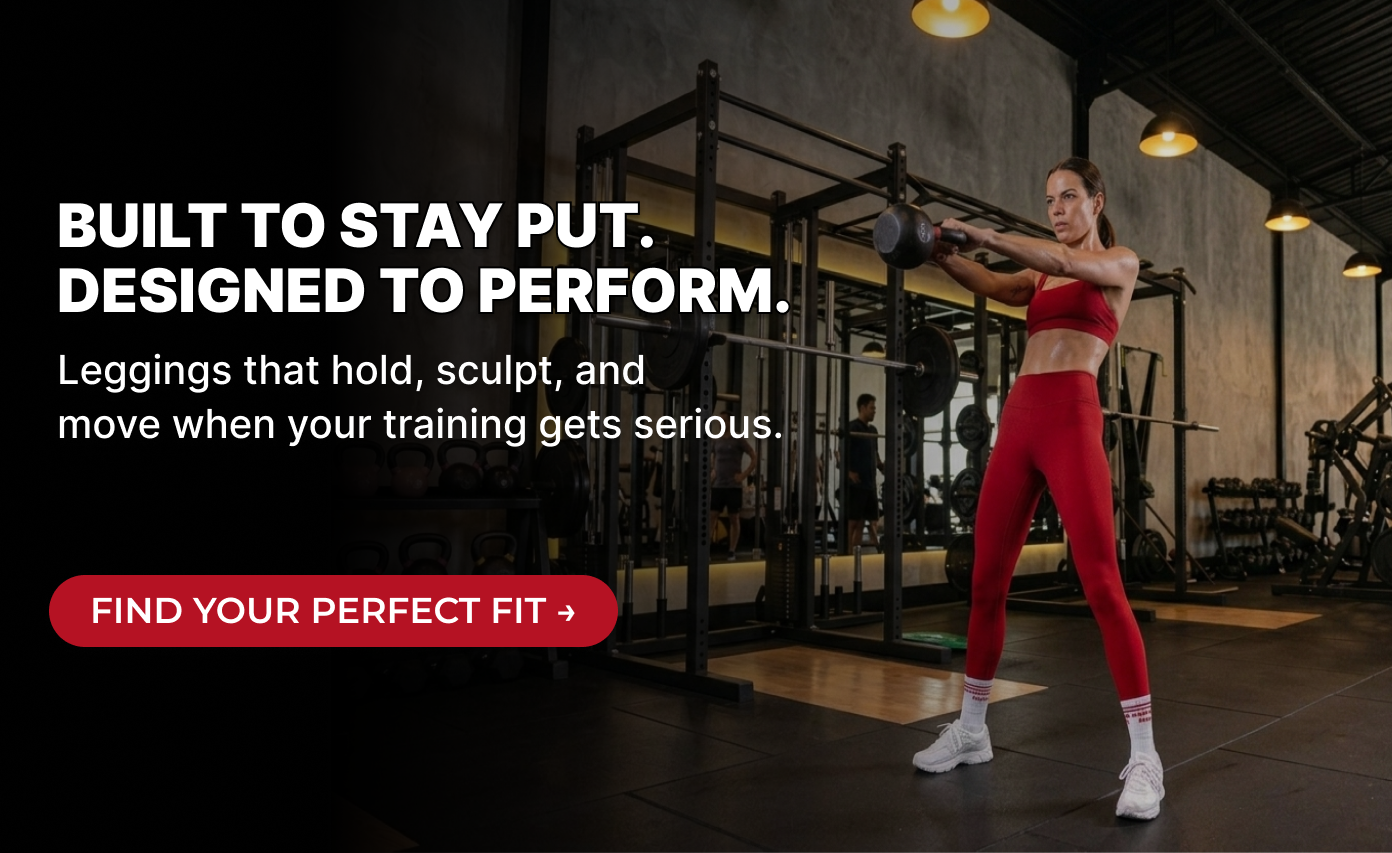
Gym leggings should feel snug and supportive without restricting movement. The right fit stays in place during workouts, prevents slipping, and provides enough compression to support your body without discomfort. They should lock in through squats, sprints, lifts and stretches while still letting you move freely. Secure, sculpted, never suffocating.
Quick Summary
- Gym leggings should feel snug but not restrictive
- They should stay in place during movement
- Too loose means slipping, bunching and no support
- Too tight means discomfort, digging and restricted movement
- Fit should match your workout type
- The waistband should sit flat without rolling down
- The fabric should smooth and support without turning sheer
- Compression should feel secure, not uncomfortable
- A squat test is one of the easiest ways to check the fit
How Tight Should Gym Leggings Be?
The right gym leggings should feel like a second skin - close to your body, but still comfortable enough to move freely.
Think secure, sculpted and controlled. Not squeezed in. Not sliding down.
A strong fit should hold its shape while you train. You should be able to squat, hinge, lunge, sprint and stretch without pulling the waistband up every five minutes.
If your leggings are too loose, they will:
- Slide down during workouts
- Bunch around the knees or waist
- Feel unsupportive
- Lose their shape through movement
- Create extra fabric around the crotch, knees or ankles
If they are too tight, you may notice:
- Digging around the waistband
- Restricted movement
- Visible pulling across the fabric
- The fabric turning sheer when stretched
- Deep marks on your skin after wearing them
- A waistband that rolls, folds or cuts in
A good fit should:
- Stay in place when you walk, squat, or stretch
- Sit flat against your waist without rolling
- Allow full range of motion
- Feel secure without constant adjusting
- Smooth and contour your shape without pinching
- Feel supportive through the glutes, thighs and core
- Look clean under movement, not strained or over-stretched
The Squat Test: The Easiest Way to Check Your Leggings Fit
Before you commit to a pair, move in them. A mirror check is not enough.
Do a few squats, lunges and deep stretches. Your leggings should stay in place, hold coverage and feel stable through the waistband and seams.
If the waistband slides, the fabric goes sheer, or you feel restricted through the hips and thighs, the fit is off.
How Tight Should the Waistband Feel?
The waistband should feel firm enough to stay put, but soft enough to move with you.
A good waistband should sit flat against your waist. It should not roll down, fold over, dig in, or leave you constantly adjusting between sets.
For high-compression leggings, expect a more locked-in feel around the waist and core. For softer leggings, the waistband should still feel secure, just less structured.
How Much Compression Do You Need?
Compression is the difference between leggings that simply cover your body and leggings that support it.
The right level depends on how you train:
- Firm compression: best for lifting, strength training and high-support shaping
- Medium compression: ideal for mixed training, gym sessions and everyday movement
- Light compression: better for Pilates, recovery, walking and all-day wear
More compression does not always mean better. The goal is support that helps you move with control, not tightness that fights your body.
Fit Should Match Your Workout Type
The level of tightness also depends on your activity.
For lifting or strength training, a more structured, high-compression fit helps keep everything in place. You want support through the waist, hips and glutes so you can move with control.
For HIIT or high-movement workouts, leggings need to stay secure while handling sweat. Look for flexible stretch, sweat control and a waistband that will not shift when the pace picks up.
For Pilates or low-impact sessions, a softer and more flexible fit is often more comfortable. You still want shape and coverage, just with a calmer second-skin feel.
Choosing the right fit helps prevent common issues like rolling down, discomfort, and lack of support, while also improving confidence during training.
Should Gym Leggings Feel Tight When You First Put Them On?
Yes, they can feel firm at first, especially if they are high-compression leggings. That does not automatically mean they are too small.
The real test is movement. If they settle comfortably, stay up and let you move freely, the fit is likely right. If they dig, restrict your stride, or pull across the fabric, they are too tight.
What About Squat-Proof Leggings?
Squat-Proof leggings should stay opaque when the fabric stretches. This comes down to fabric quality, thickness, knit structure, stretch recovery and sizing.
If leggings go sheer when you squat, they may be too small, the fabric may be too thin, or the material may not have enough recovery for the way you train.
Good leggings should stretch with you, then snap back into shape. No sagging. No sheerness. No second guessing.
Find Your Perfect Fit
Not all leggings are built the same. The right pair depends on how you train, move, and want to feel.

Ignite Flex Legging
No slip. No limits. Built for high movement and sweat-heavy sessions.
Sculpt Contour Compression Leggings
High-compression support that shapes, holds, and stays in place during lifts.
Luxe CloudFlow Legging
Second-skin comfort designed for low-impact training and all-day wear.
Explore our Leggings collection to find the right fit for your training — from high-compression support to soft, flexible styles designed to move with you.
FAQs
Are Gym Leggings Supposed to Be Tight?
Yes, they should feel snug and supportive, but not restrictive or uncomfortable.
How Do I Know if My Leggings Are Too Tight?
If they dig into your waist, limit movement, turn sheer, or feel overly restrictive, they are too tight.
Should Leggings Slide Down When I Move?
No, well-fitting gym leggings should stay in place without constant adjusting.
Why Do My Gym Leggings Roll Down?
Leggings usually roll down when the waistband is too loose, too tight, too low, or not structured enough for your movement.
Should I Size up or Down in Gym Leggings?
If you are between sizes, choose based on how you want them to feel. Size down for a more compressive fit if the fabric still moves well. Size up if the waistband digs or the fabric pulls.
How Do I Know if Leggings Are Squat-Proof?
Do a squat test in natural light. The fabric should stay opaque, smooth and secure without stretching thin across the glutes or thighs.


Leave a comment
This site is protected by hCaptcha and the hCaptcha Privacy Policy and Terms of Service apply.